

Hormone Replacement Therapy (HRT) in Singapore

Last updated: Oct 1, 2026
What Is Hormone Replacement Therapy?
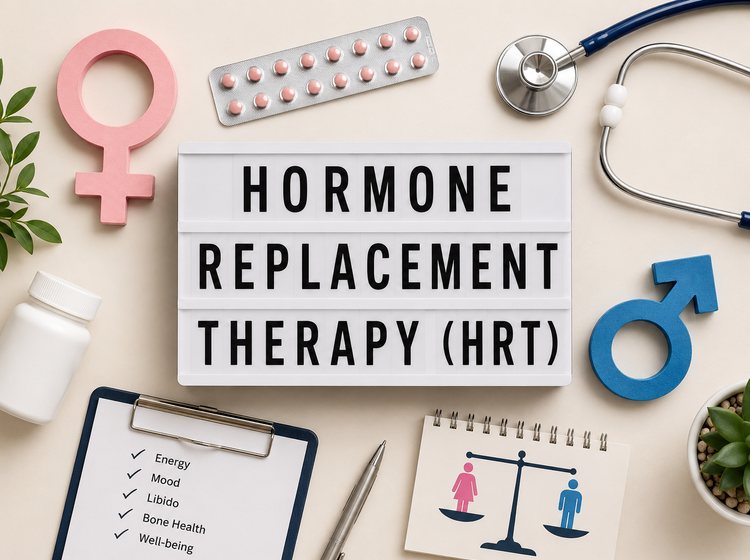
Hormone replacement therapy (HRT) is a medical treatment that replaces or supplements hormones the body no longer produces in adequate amounts, typically due to menopause in women or age-related testosterone decline in men. The aim is to restore hormone levels closer to a physiological range so that symptoms associated with hormonal change become more manageable.
In women, HRT, or now known as menopausal hormone therapy (MHT), replaces oestrogen and is often combined with a progestogen such as progesterone. In men, HRT generally means testosterone replacement therapy (TRT), which restores testosterone in those with clinically low levels.
In Singapore, HRT is prescribed following a medical consultation and, where appropriate, hormone testing to confirm that treatment is suitable.
How Hormone Replacement Therapy Works
HRT works by introducing hormones that act on the same receptors as the body's natural hormones, supporting the regulation of processes affected by hormonal decline such as temperature control, mood, libido, energy, bone turnover, and sexual function.
The hormones used are delivered in different forms depending on your needs and tolerance:
- Oral tablets travel through the digestive system and liver before entering circulation.
- Transdermal patches and gels release hormones steadily through the skin.
- Injections release hormones gradually over several weeks.
- Local preparations such as vaginal tablets or creams act mainly at the site of application rather than throughout the body.
Because hormones interact with multiple body systems, doses are individualised and reviewed regularly by a doctor, with the aim of using the lowest level that adequately manages symptoms.
Who May Benefit from Hormone Replacement Therapy


HRT may be suitable for adults whose symptoms of hormonal decline affect daily life, where a doctor has assessed that treatment is appropriate. The severity of symptoms, medical history, and risk factors all influence whether treatment may be recommended.
HRT may be considered for:
- Women with menopause symptoms that affect daily life, such as hot flushes, night sweats, mood changes, sleep disturbances, vaginal dryness, or painful intercourse.
- Women with premature or surgical menopause, where ovarian function ends before age 40 or following surgical removal of the ovaries.
- Men with persistently low testosterone levels confirmed on blood testing, particularly when symptoms such as fatigue, reduced libido, erectile dysfunction, or loss of muscle mass are present.
"Hormone changes affect more than physical health, often influencing mood, sleep, and energy. Hormone replacement therapy, when suitable, offers a structured way to address these changes and ease their impact on daily life."
— Dr Jana Lim
"Hormone changes affect more than physical health, often influencing mood, sleep, and energy. Hormone replacement therapy, when suitable, offers a structured way to address these changes and ease their impact on daily life."
— Dr Jana Lim
Types of Hormone Replacement Therapy
The main types of HRT are grouped by the hormones they replace and the individuals they are prescribed for.
Menopausal Hormone Therapy (MHT)
MHT replaces oestrogen, often combined with progestogen for women who still have a uterus. The combined regimen helps reduce the risk of endometrial thickening associated with oestrogen alone. Oestrogen-only therapy is generally reserved for women who have had a hysterectomy, since the protective role of progestogen is no longer required.
Local vaginal oestrogen therapy, such as vaginal tablets or creams, may be used for symptoms such as vaginal dryness or discomfort during intercourse. Where hormonal treatment is assessed to be unsuitable or is not preferred, symptoms can also be eased without hormones, for example with fezolinetant (Veoza), a prescription medicine that targets hot flushes and night sweats, or with soy isoflavone supplements.
Testosterone Replacement Therapy (TRT)
TRT restores testosterone in men with confirmed low levels on a blood test. It is typically delivered by long-acting injection or daily topical gel, depending on patient preference and treatment response. Treatment is paired with regular monitoring of testosterone levels, red blood cell count (haematocrit), and prostate health.
Bioidentical Hormone Therapy
Bioidentical hormones are chemically identical to those produced by the body. They may be prescribed within either MHT or TRT regimens as part of an individualised treatment plan, and remain subject to the same medical assessment, monitoring, and prescribing standards as conventional HRT.
Considering hormone replacement therapy or experiencing symptoms of hormonal decline? Speak with one of our male or female doctors to find out whether HRT is suitable for you. Book an appointment today.
Book Your Appointment TodayPotential Side Effects of Hormone Replacement Therapy
HRT can cause side effects, though many people tolerate treatment well and effects often settle within the first few months. The likelihood and type of side effects vary by hormone, dose, and route of delivery.
Side effects more commonly reported include:
- Breast tenderness or fullness, more common with oestrogen
- Nausea, headaches, or bloating, especially when starting oral preparations
- Mood changes during the early weeks of treatment
- Skin irritation at the application site for patches or gels
- Acne or oily skin with testosterone therapy
- Fluid retention at higher doses
Less common but more serious risks include venous thromboembolism, stroke, and certain hormone-sensitive cancers in MHT, and raised red blood cell count or worsening sleep apnoea in TRT. The likelihood depends on age, hormone type, dose, route, and personal medical history. Regular reviews allow side effects to be monitored and the regimen adjusted if needed.
When Hormone Replacement Therapy May Not Be Suitable
HRT is generally not recommended for individuals with conditions that may be worsened by hormone supplementation. It is typically avoided in:
- A history of breast cancer, prostate cancer, or other hormone-sensitive cancers
- A history of stroke or coronary heart disease
- Active or past blood clots, including deep vein thrombosis or pulmonary embolism
- Undiagnosed vaginal bleeding, more relevant to MHT
- Untreated severe sleep apnoea or uncontrolled heart failure, more relevant to TRT
- Active liver disease
Even when HRT is suitable, treatment generally starts with the lowest dose that adequately manages symptoms and is reviewed regularly to balance benefits against risks.
Hormone Replacement Therapy: What to Expect
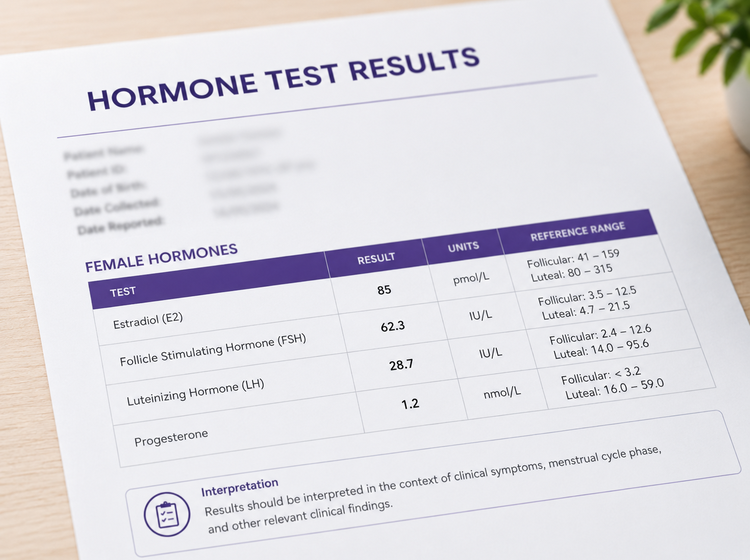
HRT typically involves:
Initial Consultation
Your doctor reviews your symptoms, medical history, family history, and current medications to assess whether HRT is appropriate.
Hormone Testing
A blood test measures relevant hormone levels. For men, this typically includes total testosterone, sometimes alongside related markers. For women, hormone testing is not usually required.
Treatment Plan and Prescription
Based on the results, and if HRT is suitable, your doctor recommends a hormone, dose, and delivery method, and explains potential side effects and what to expect.
Follow-Up and Monitoring
Reviews are usually scheduled within the first few months and then periodically, with dose adjustments and repeat testing as needed.
Disclaimer: This information is provided as a general guide and does not replace medical advice. The treatment process may vary based on your individual circumstances. Speak with a doctor for personalised guidance.
Cost of Hormone Replacement Therapy in Singapore
At ATA Medical, we offer HRT for men and women, where assessed as suitable by our doctors.
Periods that stop before the age of 40 may be caused by premature ovarian insufficiency (POI), where the ovaries stop working normally. Our doctors can assess the cause of absent periods (amenorrhoea), usually with hormone blood tests. If POI is confirmed, a referral to a specialist can be made for ongoing HRT.
Our prices are as follows:
| Test/Treatment | Price*^ |
|---|---|
| Consultation | $65.40 |
| Extended Consultation (Over 30 Minutes) | $98.10 |
| Menopausal Hormone Therapy | |
| Systemic MHT (Tibolone, Oral) | $75.21 |
| Systemic MHT (Progesterone, Oral) | $43.60 |
| Systemic MHT (Transdermal Gel) | $35.97 |
| Local Vaginal Oestrogen Therapy (Vaginal Tablet) | $70.85 |
| Non-Hormonal Options (for Menopause Management) | |
| Prescription Medication (Oral Tablets) – Fezolinetant (Veoza) | $136.85 |
| Supplement (Oral Capsules) – Soy Isoflavones | $68.67 |
| Local Vaginal Moisturiser (Vaginal Pessary) – Gynella Balance | $65.40 |
| Testosterone Replacement Therapy | |
| Testosterone Injection | $381.50 / injection |
| Testosterone Gel | $196.20 / box |
| Hormone Testing | |
| Estradiol / Oestrogen (E2) | $32.70 |
| Follicle Stimulating Hormone (FSH) | $32.70 |
| Thyroid Function Test (TSH) | $32.70 |
| Vitamin D Deficiency Test | $130.80 |
| DEXA Bone Densitometry | $141.70 |
|
Female Acne / Weight Gain Screen**
Testosterone, Estradiol, Progesterone, TSH, Cortisol, FSH, Luteinising Hormone (LH),
Prolactin, Dehydroepiandrosterone Sulfate (DHEAS), Sex Hormone Binding Globulin
(SHBG)
(May be recommended for those suspected of having hormonal acne) |
$218 |
|
Hormonal Study
DHEAS, Insulin-like Growth Factor 1 (IGF-1), SHBG, FSH,
LH, E2
|
$196.20 |
|
Comprehensive Deficiency / Hair Loss Screen
Folate, Vitamin B12, Vitamin D, Iron, Total Iron Binding Capacity, % Iron Saturation,
Ferritin, Zinc, Magnesium, Free T4, TSH
|
$263.78 |
| Women's Wellness (Full Body Screening) | From $152 |
^Prices last updated on Sep 15, 2026. While every effort is made to keep pricing information up to date, please contact our team to confirm the latest rates.
**Recommended to be done during days 2–5 of menstrual cycle and between 8:30 AM and 10:00 AM for accuracy.
For your comfort, consultations are available with our male or female doctors. Please let us know your preference when booking your appointment.
Meet Our Female Doctors




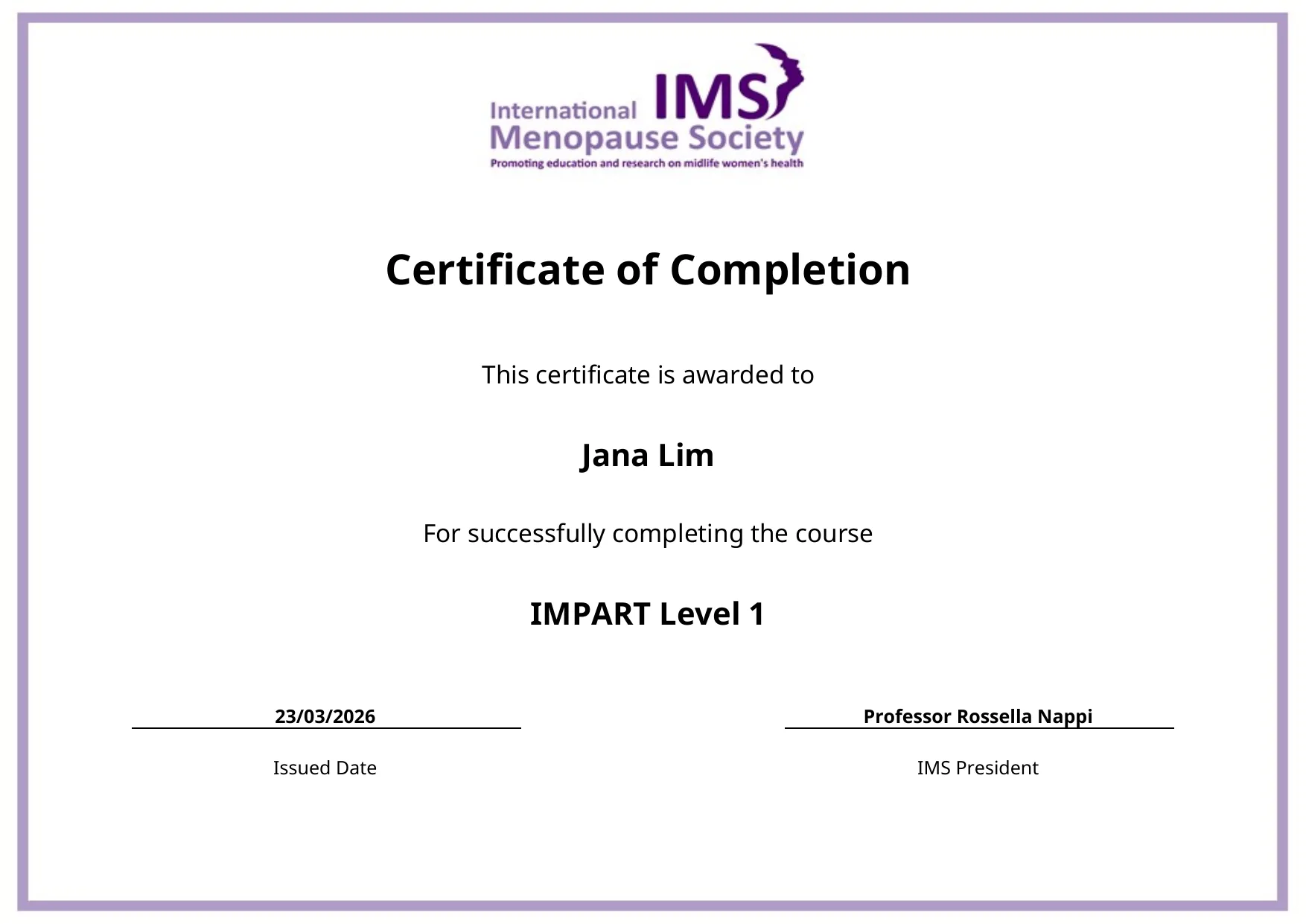
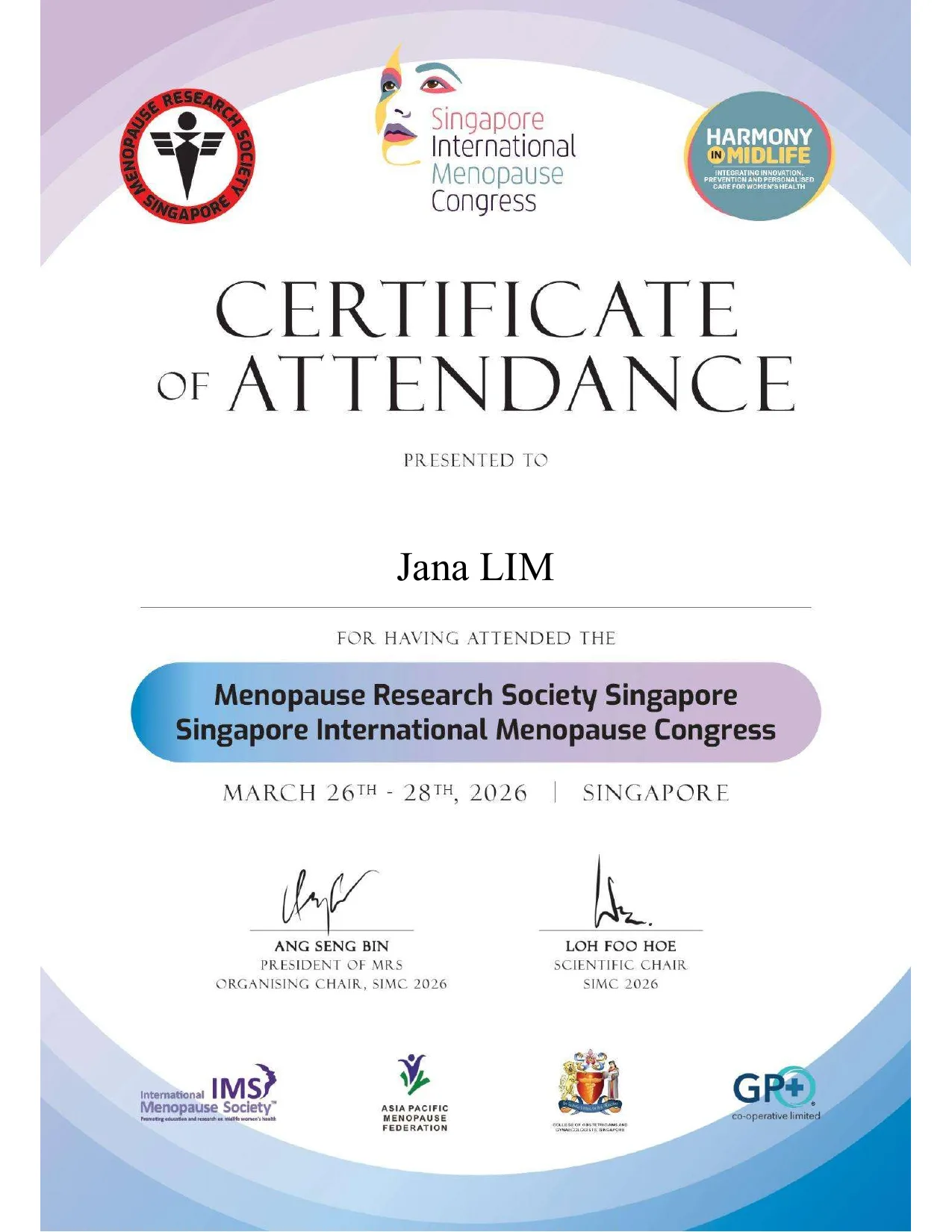
Dr Jana Lim is certified in the International Menopause Society (IMS) IMPART Programme (Level 1) and holds Entry-Level Associate Membership of the IMS. IMPART is a structured, evidence-based training programme in menopause management and menopausal hormone therapy, equipping her to support women through perimenopause and menopause.
Book a Consultation for Hormone Replacement Therapy
ATA Medical @ Tanjong Pagar
Sat: 8:30 AM – 12:30 PM
Sun & PH: Closed
Last appt: 5:15 PM (Mon–Fri), 12:15 PM (Sat)
ATA Medical @ Orchard
Sat: 8:30 AM – 12:30 PM
Sun & PH: Closed
Last appt: 5:15 PM (Mon–Fri), 12:15 PM (Sat)
ATA Medical @ Jurong
Sat: 8:30 AM – 12:30 PM
Sun & PH: Closed
Last appt: 5:15 PM (Mon–Fri), 12:15 PM (Sat)
ATA Medical @ Novena
Sat: 8:30 AM – 12:30 PM
Sun & PH: Closed
Last appt: 5:15 PM (Mon–Fri), 12:15 PM (Sat)