

Full Body MRI
Full Body MRI with doctor review and follow-up care
- Covers multiple body systems in one scan
- Detailed soft tissue imaging without ionising radiation
- Clear pricing with upfront cost information

Last updated: Sep 27, 2026
What Is a Full Body MRI?
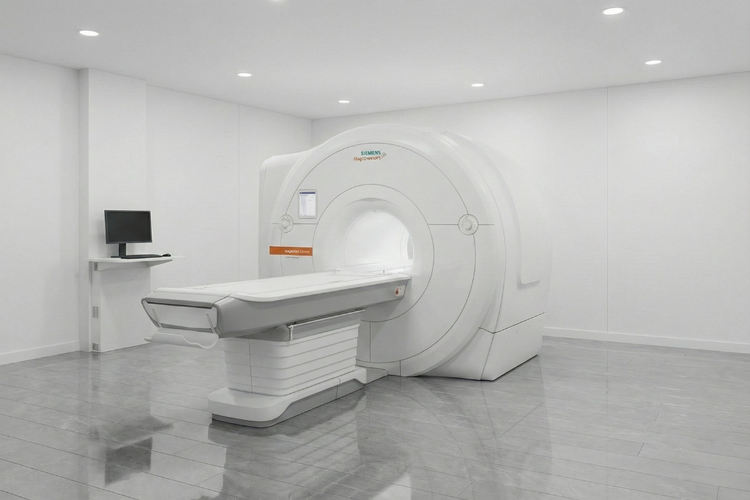
A full body MRI is a comprehensive imaging scan that provides detailed images of most major organs and soft tissues in a single session, without using ionising radiation. The scan typically images the body from the brain down to the mid-thigh and does not routinely include the lower legs.
It captures high-resolution images of areas such as the brain, spine, chest, abdomen, pelvis and major joints. This gives a broader view of your internal structures than a targeted scan, which focuses on a single symptom or body part.
A broader view can help identify potential concerns earlier, give you a better understanding of what is happening inside your body, and lead to clearer discussions with your doctor.
Why Do a Full Body MRI?
A Single Comprehensive Scan
Examine many major organs and structures in one appointment, instead of requiring multiple separate scans.
Identification of Health Issues Early
Identify areas that may need further checking early, even before symptoms are clear.
Following Up on Earlier Test Results
Get a more in-depth assessment after initial tests to help clarify earlier findings.
No Radiation Exposure
Gain detailed health insights without ionising radiation, unlike CT scans and X-rays.
How a Full Body MRI Scan Works
A full body MRI works by using a strong magnetic field and radiofrequency pulses to generate signals from hydrogen
atoms in the body.
Unlike ionising radiation used in CT scans and X-rays,
magnetic fields and radio waves are not associated with DNA damage, which is why MRI is
commonly regarded as a non-radiation imaging option.
These signals are processed by a computer to produce high-resolution cross-sectional
images, particularly of soft tissues such as organs, muscles, nerves, and blood vessels,
where MRI often provides greater detail than many other imaging methods.

Full Body MRI vs Targeted MRI: Key Differences Explained
The main difference between a full body MRI and a targeted MRI is the scope of areas examined and the clinical reason for performing the scan.
| Aspect | Full Body MRI | Targeted MRI |
|---|---|---|
| Areas scanned | Covers multiple major organs and body systems in one session | Focuses on a specific body part or region |
| Purpose of scan | Used for broad internal assessment for health screening or further review after earlier tests | Used when symptoms or findings point to a particular area |
| Level of detail | Uses a broader scanning approach, and some small abnormalities may be missed | Provides more detailed imaging of a specific area |
| Scan duration | Usually longer due to the number of areas scanned | Usually shorter as only one area is examined |
| When it may be considered | When concerns are not limited to one area or when a wider overview is needed | When there is a clear reason to examine a specific area |
What a Full Body MRI Can Detect
A full body MRI can show structural changes in different parts of the body that may be linked to certain medical conditions.
| Body System | What the MRI May Show |
|---|---|
| Brain and nerves | Structural changes in the brain, spinal cord, or nearby blood vessels, such as areas that appear unusual or show age-related wear and tear. |
| Heart and blood vessels | Changes in the size or structure of major blood vessels or heart-related structures, such as unusual widening or altered vessel appearance, which may be seen in some vascular conditions. |
| Chest organs | Structural differences in the lungs or nearby tissues, such as areas that appear irregular or denser than expected, which may require further evaluation. |
| Abdominal organs | Changes in organs such as the liver, kidneys, pancreas, or adrenal glands, including variations in size or internal structure that may be seen with cystic or fatty changes. |
| Pelvic organs | Structural differences in organs in the lower abdomen, such as changes in organ size or internal appearance, which may be noted in certain prostate, ovarian, or uterine conditions. |
| Muscles, joints, and bones | Signs of wear and tear or inflammation affecting joints, bones, or surrounding soft tissues, such as disc changes or joint surface irregularities. |
| Soft tissues and lymph nodes | Lumps, swellings, or enlarged lymph nodes that differ from surrounding soft tissue and may require further assessment. |
Disclaimer: A full body MRI uses a broad screening approach to assess multiple body areas in one scan and may not detect all issues or abnormalities.
What a Full Body MRI Cannot Show Clearly
A full body MRI does not reliably detect all medical conditions, especially those that do
not cause visible structural changes in organs or tissues.
For example, MRI may not clearly show:
- Metabolic disorders, such as diabetes or cholesterol problems, which are better detected through blood tests
- Hormonal conditions, such as thyroid disorders, which affect how the body functions rather than organ structure
- Digestive conditions, such as irritable bowel syndrome, which do not cause structural abnormalities
- Very early inflammation or infection, before visible tissue changes occur
- Early cellular changes that have not yet altered the shape or size of organs
MRI is also less suitable for assessing lung air spaces and some bowel conditions, where
investigations such as CT scans, endoscopy, or functional tests may be more informative.
In addition, a full body MRI does not replace cancer screening tools such as mammograms, Pap smears or HPV tests, and stool tests or colonoscopy, as these are established screening
tools designed to detect cancers in specific regions.
What to Expect During a Full Body MRI Scan
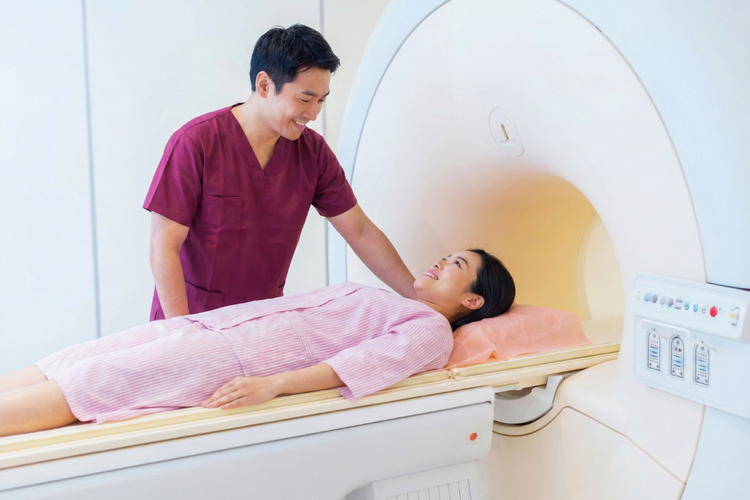
A full body MRI typically takes 60 to 90 minutes and involves several steps:
- Before the scan begins, you will be asked to change into a gown. Ear protection is usually provided at this stage to reduce discomfort from the scanner noise.
- You will then lie flat on a motorised table, which moves slowly into the MRI scanner.
- Images are taken of different body regions as the scan progresses. In some cases, a contrast agent may be used to improve image detail.
During the scan, you may hear rhythmic knocking or tapping sounds from the machine. The scan itself is painless, but it is important to remain still to ensure clear and accurate images.
Potential Side Effects and Considerations of a Full Body MRI
A full body MRI is commonly well tolerated, but there are some considerations to be aware of before deciding on the scan.
- Physical comfort – You may feel some discomfort from lying still for an extended period, especially if you have joint or back issues.
- Claustrophobia and noise – The enclosed scanner space and loud knocking sounds may be uncomfortable for some individuals, although ear protection is provided.
Discussing these factors with your doctor before the scan helps determine whether a full body MRI is suitable and what steps may be taken to support your comfort and safety.
Preparing for Your Full Body MRI
Preparing for your full body MRI is usually straightforward and helps ensure the process goes smoothly:
- Wear clothing that is easy to change out of
- Avoid wearing metallic objects such as jewellery and watches, as these will need to be removed
- Follow fasting instructions if contrast is used, where applicable
- Inform your doctor of relevant medical history, including pregnancy, implanted medical devices, prior surgeries, any history of contrast reactions, or claustrophobia
MRI instructions may vary depending on the scan protocol used. We will provide instructions prior to your appointment with us.
How Much Does a Full Body MRI Cost?
At ATA Medical, we offer a comprehensive range of MRI imaging services, including full body MRI, with prices as follows:
| Test | Price*^ |
|---|---|
| Full Body MRI | $4,388 |
| Targeted MRI Scans | |
| Brain | From $1,122.70 |
| Neck / Nasopharynx / Oropharynx / Post Nasal Space | $1,504.20 |
| Spine | From $1,090 |
| Shoulder (per side) | $1,090 |
| Elbow (per side) | $1,090 |
| Forearm (per side) | $1,090 |
| Wrist (per side) | $1,090 |
| Hand (per side) | $1,090 |
| Abdomen (Kidney, Liver, Pancreas, Gallbladder & Spleen) | $1,613.20 |
| Pelvis | From $1,613.20 |
| Prostate | $1,613.20 |
| Hip (per side) | $1,090 |
| Thigh / Femur (per side) | $1,090 |
| Knee (per side) | $1,090 |
| Foot (per side) | $1,090 |
| Stroke Screen (includes MRA, COW & Carotids) | $1,231.70 |
| All others | Please enquire |
^Prices last updated on Feb 12, 2026. While every effort is made to keep pricing information up to date, please contact our team to confirm the latest rates.
Note: MRI scans are performed at our partner radiology centres, with results
reviewed and explained by our doctors.
For MRI scans of areas not listed, please contact us
for more information.
Can I Use MediSave for My Full Body MRI?
You can use up to $600 from your MediSave each year per patient for an MRI scan
when it is for the diagnosis or management of a medical
condition. This amount may be claimed from your own MediSave or that of an immediate family
member.
This does not extend to plain X-rays or certain other imaging tests, which are covered under
separate MediSave provisions.
If you need clarification on eligibility or claims, please contact us for more information.
Book an Appointment for a Full Body MRI
You are required to consult our doctor if you do not have a valid radiology order form. There will be a consultation fee of $49.05 NETT.
ATA Medical @ Tanjong Pagar
Sat: 8:30 AM – 12:30 PM
Sun & PH: Closed
Last appt: 5:15 PM (Mon–Fri), 12:15 PM (Sat)
ATA Medical @ Orchard
Sat: 8:30 AM – 12:30 PM
Sun & PH: Closed
Last appt: 5:15 PM (Mon–Fri), 12:15 PM (Sat)
ATA Medical @ Jurong
Sat: 8:30 AM – 12:30 PM
Sun & PH: Closed
Last appt: 5:15 PM (Mon–Fri), 12:15 PM (Sat)
ATA Medical @ Novena
Sat: 8:30 AM – 12:30 PM
Sun & PH: Closed
Last appt: 5:15 PM (Mon–Fri), 12:15 PM (Sat)