

Medically Supervised Weight Loss in Singapore
- Holistic approach with medication option available if suitable
- Option to follow up via telemedicine, with medication delivered to your home
- Complimentary InBody scans for all weight loss patients to track fat loss versus muscle preservation

"Obesity is complex and often caused by multiple factors such as genetics, environment, gut microbiome, and lifestyle. That's why we believe in a comprehensive approach to weight loss so that the results are long-term and sustainable."
— Dr. Leonard Leng, MBBS, MMed (FM), POMS Certified, BOMA
"Obesity is complex and often caused by multiple factors such as genetics, environment, gut microbiome, and lifestyle. That's why we believe in a comprehensive approach to weight loss so that the results are long-term and sustainable."
Starting your weight loss journey can be difficult,
especially if there have been previous setbacks. We recognise these challenges and provide medically
supervised treatments to support your efforts.
While medications can help in the process, long-term success depends on making changes to your
lifestyle. When combined, medication and lifestyle changes not only improve your physical appearance
but also promote better health by reducing the risk of conditions such as diabetes, heart
disease, and joint problems.
At ATA Medical, we believe in a holistic approach to weight loss. Our
doctors certified in obesity management combine lifestyle coaching, body composition tracking, and
medication
when appropriate to support sustainable, long-term results.
What Are the Health Risks of Obesity?
Obesity is a significant public health concern in Singapore, with around 40% of Singaporeans classified as overweight. Beyond the number on the scale, excess body fat increases the risk of multiple chronic conditions that can shorten lifespan and reduce quality of life.
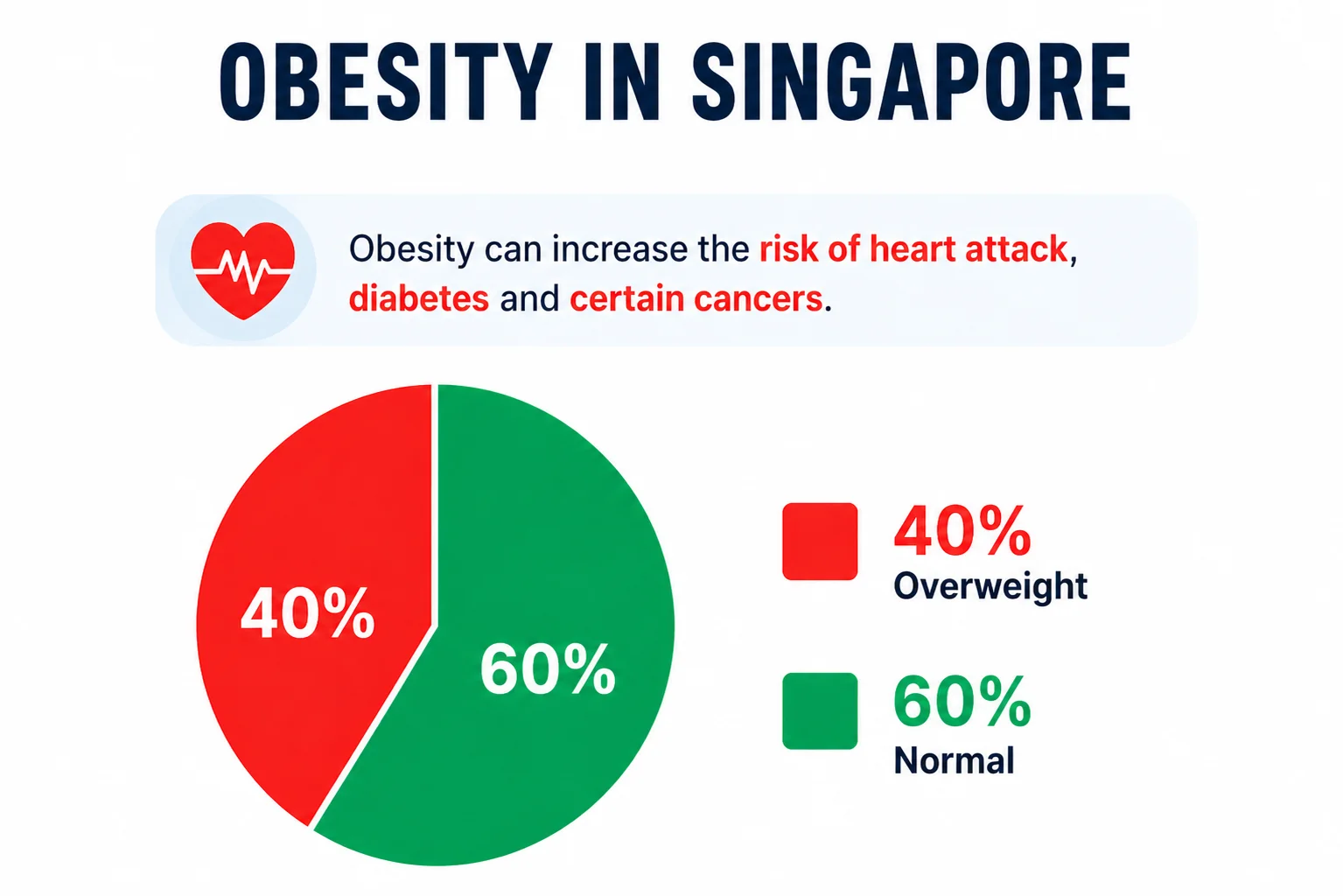
Common health risks linked to obesity include:
- Cardiovascular Disease: Excess weight raises the risk of high blood pressure, high cholesterol, heart attacks, and stroke by placing additional strain on the heart and blood vessels.
- Type 2 Diabetes: Obesity reduces the body's sensitivity to insulin, leading to elevated blood sugar levels and an increased risk of developing type 2 diabetes.
- Joint Pain and Osteoarthritis: Carrying extra weight places mechanical stress on weight-bearing joints, particularly the knees and hips, accelerating cartilage wear and causing chronic pain.
- Sleep Apnoea and Breathing Problems: Excess fat around the neck and abdomen can obstruct the airway and restrict lung expansion, contributing to obstructive sleep apnoea and reduced exercise tolerance.
- Mental Health and Self-Esteem: Weight-related stigma and hormonal changes can affect mood, contributing to depression, anxiety, and reduced self-confidence.
- Fatty Liver and Metabolic Syndrome: Obesity is closely linked to metabolic dysfunction-associated steatotic liver disease (MASLD, formerly non-alcoholic fatty liver disease or NAFLD) and metabolic syndrome, a cluster of conditions that further raise cardiovascular risk.
Even modest weight loss of 5 to 10% of body weight has been shown to meaningfully reduce these risks and improve overall health outcomes.
What Are Medical Weight Loss Treatment Options?
Common medical weight loss treatments include appetite suppressants, GLP-1 weight loss injections, and fat absorption blockers. Each targets a different mechanism in the body, and the right option depends on BMI, weight-related health conditions, lifestyle, and how the body has responded to previous attempts at weight management.
Appetite Suppressants
Appetite suppressants are oral medications that help you feel full sooner and stay full longer,
lowering daily calorie intake. They work by adjusting the brain signals that regulate hunger and
satiety, particularly within the hypothalamus (the part of the brain that controls appetite).
These are useful for individuals who struggle with portion control, frequent food cravings, or
persistent hunger that derails healthy eating plans. They are typically prescribed alongside dietary
adjustments and increased physical activity to maximise results.
GLP-1 Weight Loss Injections
GLP-1 receptor agonists (GLP-1RA) are weekly or daily
injections that mimic a natural gut hormone to slow stomach emptying, regulate blood sugar, and
reduce appetite. By acting on receptors in the gut and brain, they reduce calorie intake without
the constant willpower battle that comes with traditional dieting.
The most commonly prescribed GLP-1 medications in Singapore are:
- Semaglutide (Ozempic, Wegovy, Rybelsus): once-weekly injection.
- Tirzepatide (Mounjaro): dual GLP-1 / GIP receptor agonist.
- Liraglutide (Saxenda): once-daily injection.
- Dulaglutide (Trulicity): once-weekly injection.
Patients on GLP-1 medications typically lose 10 to 20% of their body weight over six to twelve months, depending on the medication, dosage, and adherence to lifestyle changes. Results are most durable when paired with resistance training and adequate protein intake to protect lean muscle mass.
Fat Absorption Blockers
Fat absorption blockers, such as orlistat, inhibit the
lipase enzyme that breaks down dietary fats.
This reduces the amount of fat absorbed by the body and lowers overall calorie intake. The
undigested fat is then passed out naturally through the bowels.
These may suit individuals whose diet is high in fat, or who prefer a non-injection treatment. They
tend to work best when combined with a moderately reduced-fat diet, which also helps minimise
gastrointestinal side effects.
When to See a Weight Loss Doctor in Singapore
Knowing when to consult a doctor for weight loss can be the difference between repeated setbacks
and lasting results. Medical guidance is particularly valuable when lifestyle changes alone are
not producing measurable progress, or when underlying health issues are affecting weight
regulation.
Common reasons to consult a weight loss doctor:
- No Progress Despite Diet and Exercise: If consistent calorie control and physical activity are not producing measurable fat loss, a clinical assessment can uncover underlying causes such as insulin resistance, thyroid dysfunction, hormonal imbalances, or polycystic ovary syndrome (PCOS). Tools like an InBody scan or DEXA scan provide detailed body composition analysis to inform a tailored weight management plan.
- Weight-Related Health Conditions: Conditions such as type 2 diabetes, high blood pressure, fatty liver, and heart disease can make weight loss more complex and warrant medical supervision to manage risks safely.
- Higher BMI or Obesity: Adults with BMI ≥ 27 with comorbidities or BMI ≥ 30 may benefit from medically supervised weight loss treatments, including prescription medications such as GLP-1 receptor agonists.
What to Expect from Our Weight Loss Programme at ATA Medical
Initial Consultation
Your first consultation is conducted in-clinic so our doctor can assess your medical history, BMI, lifestyle, and weight loss goals. A complimentary InBody body composition scan establishes your baseline so we know your starting muscle, fat, and visceral fat levels.
Personalised Plan
Based on your assessment, our doctor designs a tailored weight loss plan that may include oral appetite suppressants, GLP-1 weight loss injections, nutrition guidance, and resistance training recommendations to protect lean muscle mass.
Follow-Up Visits
Follow-ups can be done in-clinic or via telemedicine (with home medication delivery). Complimentary InBody scans are included for all weight loss patients, done during your in-clinic follow-ups or as a separate booking for telemedicine patients with no additional consult needed.
Why Body Composition Tracking Matters in Weight Loss
Significant weight loss, whether driven by medication or lifestyle changes, almost always
comes with some lean muscle loss. The number on the scale only tells half the story.
Without active body composition monitoring, individuals can lose substantial muscle alongside fat,
lowering their resting metabolism and increasing the risk of weight regain — that's why we
recommend an in-clinic InBody scan every 3 to 6 months.
An InBody scan applies bioelectrical impedance analysis (BIA) to measure body fat percentage,
skeletal muscle mass, and visceral fat in under a minute. Tracking these numbers ensures fat
loss, not muscle loss, is driving your progress, so adjustments to your medication, nutrition,
and resistance training can be made accordingly.
Recent research also identifies
genetics, gut
microbiota, hormones, and sleep as drivers of weight gain, which is why we take a
comprehensive view of your health rather than focusing on diet and exercise alone.
Why Choose Our Weight Loss Programme
1. Holistic Approach
A combination of medication, nutrition, exercise, and lifestyle changes for sustainable results.
2. Certified in Obesity Management
Our doctors are trained in POMS and BOMA to guide you through every stage of your weight loss journey.
3. In-Clinic or Telemedicine Follow-Ups
Visit our clinic or consult by telemedicine with medication delivered to your home.
4. Complimentary InBody Scans
Body composition tracking included with every follow-up, in-clinic or telemedicine, so you can see fat loss versus muscle preservation.




Weight Loss Myths, Explained
Dr Leonard Leng, one of our doctors accredited in obesity management, discusses common weight loss myths in an interview with Kiss92.
Weight Loss Price in Singapore
| Treatment | Price* |
|---|---|
| Consultation | From $49.05 |
| Appetite Suppressants | From $200 |
| Weight Loss Injections | From $436 / pen |
| InBody Body Composition Analysis | Complimentary for weight loss patients |
^Prices last updated on Apr 27, 2026. While every effort is made to keep pricing information up to date, please contact our team to confirm the latest rates.
How Do I Book a Weight Loss Consultation?
ATA Medical @ Tanjong Pagar
Sat: 8:30 AM – 12:30 PM
Sun & PH: Closed
Last appt: 5:15 PM (Mon–Fri), 12:15 PM (Sat)
ATA Medical @ Orchard
Sat: 8:30 AM – 12:30 PM
Sun & PH: Closed
Last appt: 5:15 PM (Mon–Fri), 12:15 PM (Sat)
ATA Medical @ Jurong
Sat: 8:30 AM – 12:30 PM
Sun & PH: Closed
Last appt: 5:15 PM (Mon–Fri), 12:15 PM (Sat)
ATA Medical @ Novena
Sat: 8:30 AM – 12:30 PM
Sun & PH: Closed
Last appt: 5:15 PM (Mon–Fri), 12:15 PM (Sat)